




5 Best Ancient Sites to Visit in Sardinia
Sardinia is often celebrated for its white-sand beaches and emerald seas, yet its soul lies far deeper—carved into stone, buried beneath grass-covered mounds, and guarded by silent towers that predate Rome by millennia. Here are five ancient sites that bring Sardinia’s archaeological spirit vividly to life.
1. Su Nuraxi di Barumini – Echoes of a Lost Civilization
A UNESCO World Heritage treasure, Su Nuraxi is the heart of Sardinia’s mysterious Nuragic culture. Rising like a colossal stone beehive, the central tower dates back over 3,500 years. Wander through narrow corridors, peer into ancient cisterns, and imagine the fortress buzzing with life—a place of ritual, defence, and community. From the walls, the vast plains of Marmilla stretch into the horizon, just as they did when Bronze Age Sardinians watched for invaders. Visiting Su Nuraxi feels less like observing history and more like stepping back into it.
 test
test

2. Nora – A Coastal City Lost to Time
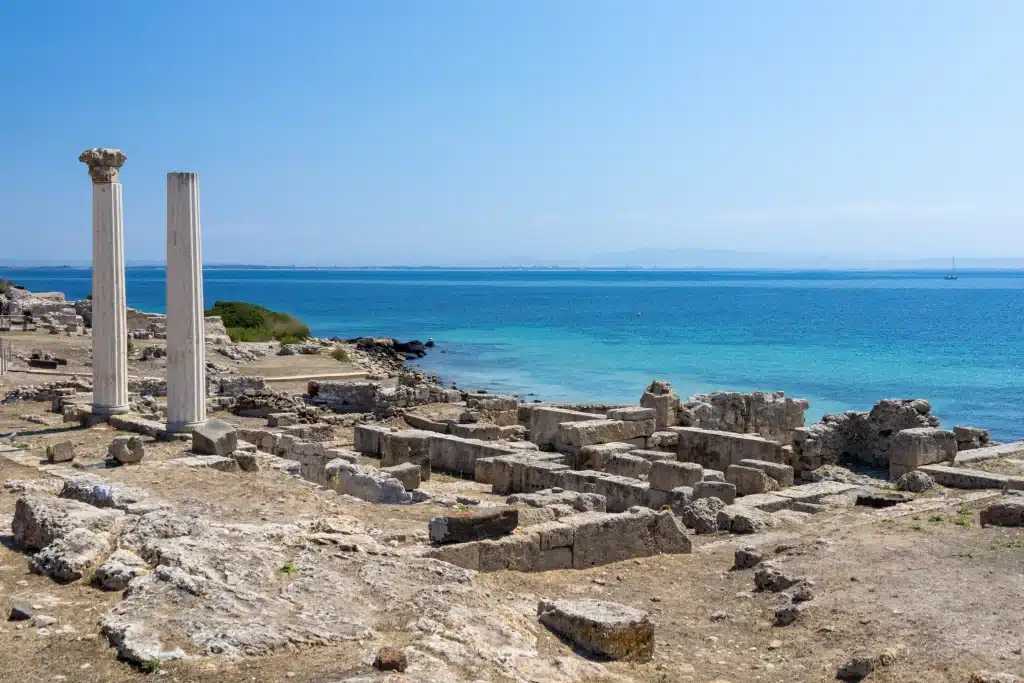
Perched on a peninsula near Pula, Nora is one of Sardinia’s most captivating archaeological sites. Founded by Phoenicians and later conquered by Romans, it lies on a shoreline where turquoise waters meet ancient stone. Explore mosaic floors, the remains of temples, thermal baths, and a Roman theatre overlooking the sea. As the sun sets, the site glows golden, offering an unforgettable perspective into Sardinia’s ancient maritime world.


Discover these sites and more on our amazing itineraries.

Sardinia Treasures
Discover Sardinia, where ancient civilisations, rugged landscapes, and turquoise seas converge. The seclusion of the Mediterranean’s second largest island has provided it with unspoiled pristine landscapes and a unique window into the past. Its ‘Nuraghes’ or rock monolith structures date to the Bronze Age and its cultural traditions, passed through generations, are still visible in its Blue Zone villages. This tour offers a unique cultural adventure with striking beauty.
3. Tomb of the Giants of Coddu Ecchju – Monument to Eternity
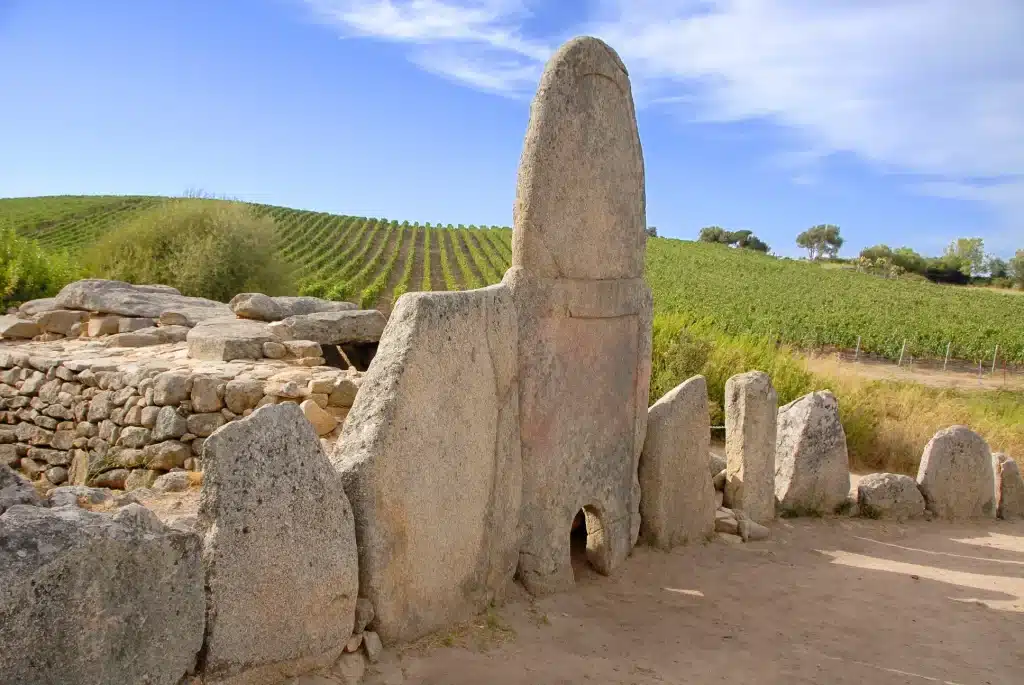
Near Arzachena in the north, the Tomb of the Giants of Coddu Ecchju stands as one of Sardinia’s most striking prehistoric burial sites. Built between 1800 and 1600 BC, this grand communal tomb features an enormous central stele of granite flanked by curved stones forming a ceremonial façade. Here you can stand in a space once dedicated to remembrance, ritual and ancestral worship. The scale alone evokes a deep sense of awe, reminding visitors that this was not a burial for one ruler but a monument for generations—an enduring symbol of community long before written history.

4. The Giants of Mont’e Prama – Colossal Guardians of Stone
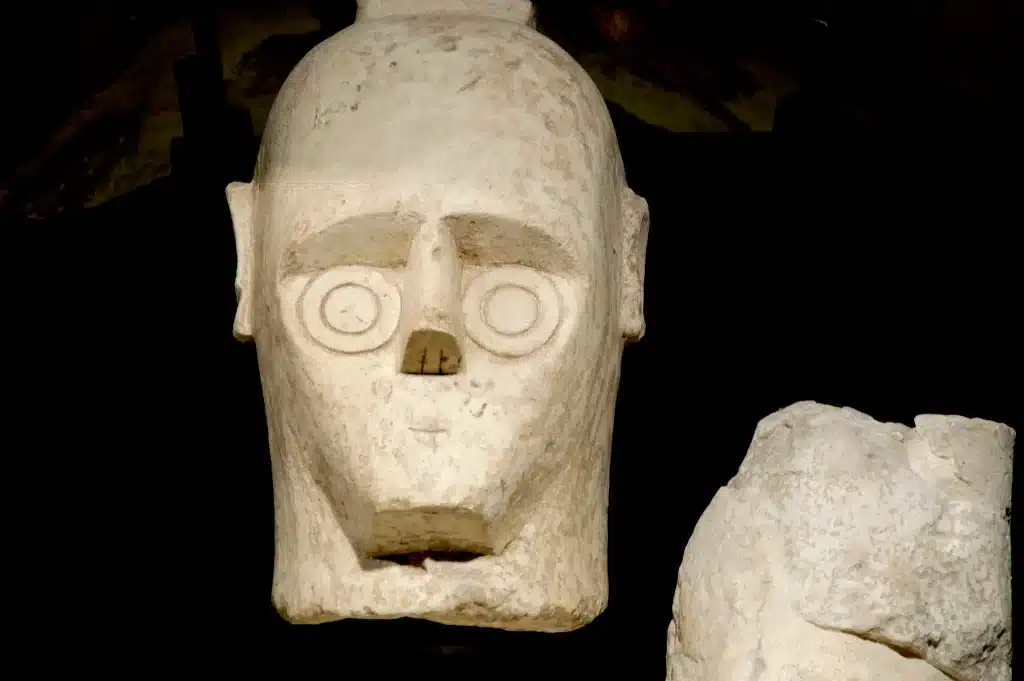
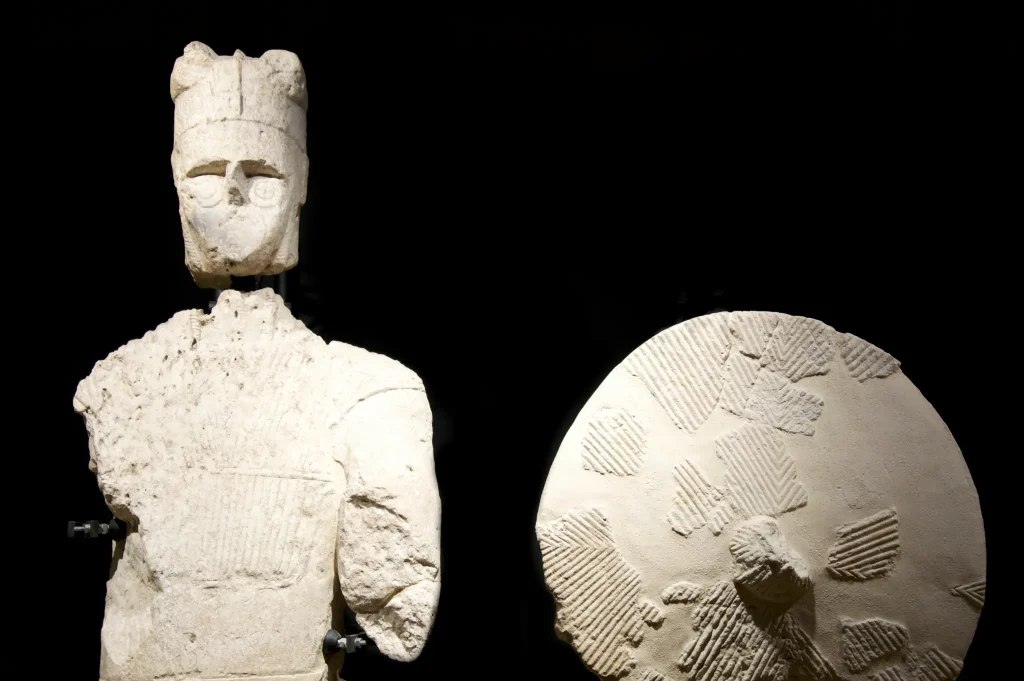
On the plains near Cabras rest figures unlike anything else in Europe: the Giants of Mont’e Prama, monumental sculptures carved between 1200 and 700 BC. With shield, bow or helmet, they stand over two metres tall, their almond-shaped eyes giving them an otherworldly presence. These warriors, newly reconstructed and displayed, appear not as ruins but as living ambassadors of Sardinia’s heroic age. Seeing them face to face is overwhelming—like being watched by guardians from another civilisation.
5. Nuraghe Santu Antine – The “Nuraghe of Nuraghes”
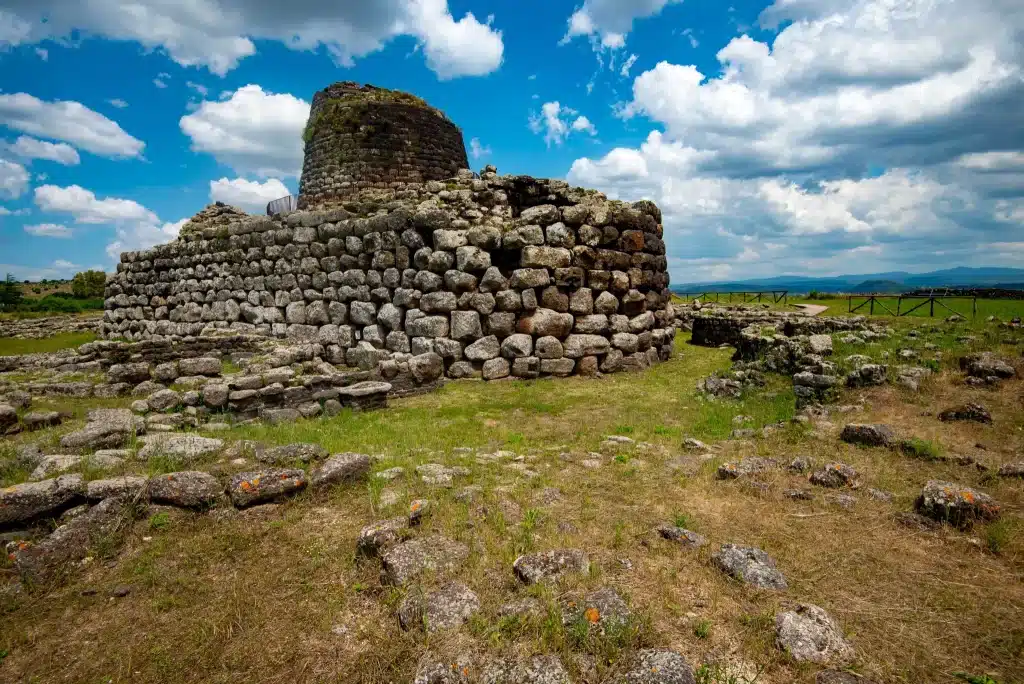
If Su Nuraxi is Sardinia’s most famous Nuragic site, Nuraghe Santu Antine is its masterpiece. Massive, labyrinthine and astonishingly intact, this three-storey stone citadel was built around the 16th century BC. Inside, spiralling stairways and vaulted passageways reveal architectural genius long before the classical world took form. From the top, the Campidano countryside unfolds in waves—an eternal landscape that has changed remarkably little since Bronze Age sentinels kept watch from the very same viewpoint.


Sardinia does not ask you simply to look at ruins—it invites you to walk among them, beneath them and inside them. From coastal temples to prehistoric tombs and stone-built fortresses older than the pyramids, every site feels deeply connected to the landscape around it, and reminds you that some of the most enigmatic civilisations once thrived far from the crowds, on a wild and beautiful island in the Tyrrhenian Sea.