







Most guides to Switzerland timing are written for Europeans. A quick train from London, a low-cost flight from Amsterdam, a long weekend in Zurich. That's not your trip. From Australia, Switzerland is a 22-plus-hour journey each way. You're taking real time off, spending real money, and you'll likely visit once in the next several years rather than popping back next season. The stakes are different. So the answer to "when should I go" deserves more than a generic "summer is busy, spring is nice."
Switzerland Month by Month: The Quick Reference
Before we go season by season, here's the full calendar view. Use this as a reference when you're locking in leave or comparing with Australian school holidays.
| Month | Season | Weather | Crowds | Best For |
|---|---|---|---|---|
| March | Spring | Cool, some snow at altitude | Low | Cities, late ski, value |
| April | Spring | Mild, fresh, occasional rain | Low-Moderate | Wildflowers, hiking opens |
| May | Spring | Warm and green, still cool at altitude | Moderate | Hiking, lakes, shoulder season |
| June | Summer | Warm, clear, long days | High | All-round access, outdoor activities |
| July | Summer | Warm to hot in valleys | Peak | Hiking, festivals — if you can handle crowds |
| August | Summer | Hottest month, afternoon storms possible | Peak | Aligns with Australian school holidays |
| September | Autumn | Crisp, clear, golden light | Moderate, dropping fast | Rail journeys, harvest, early colour |
| October | Autumn | Cool days, cold nights, peak foliage | Low | Best overall experience for most travellers |
| November | Autumn | Cold, some snow at altitude | Very Low | Early Christmas markets, deep value |
| December | Winter | Cold, snow at altitude, Christmas atmosphere | Moderate (markets) | Christmas markets, ski season opens |
| January | Winter | Cold, reliable snow cover | High (ski resorts) | Skiing, snow scenery, Zermatt/Verbier |
| February | Winter | Cold, peak ski conditions | High (ski resorts) | Skiing, Carnival season |
July and August align with Australian winter school holidays, making them the most common time for Australians to travel. Switzerland in those months is absolutely doable, but expect peak pricing, peak crowds, and strong competition for accommodation. If you have flexibility, the shoulder periods around those months — May to June or September to October — deliver meaningfully better value and a less pressured experience.
Spring: March to May
Spring in Switzerland
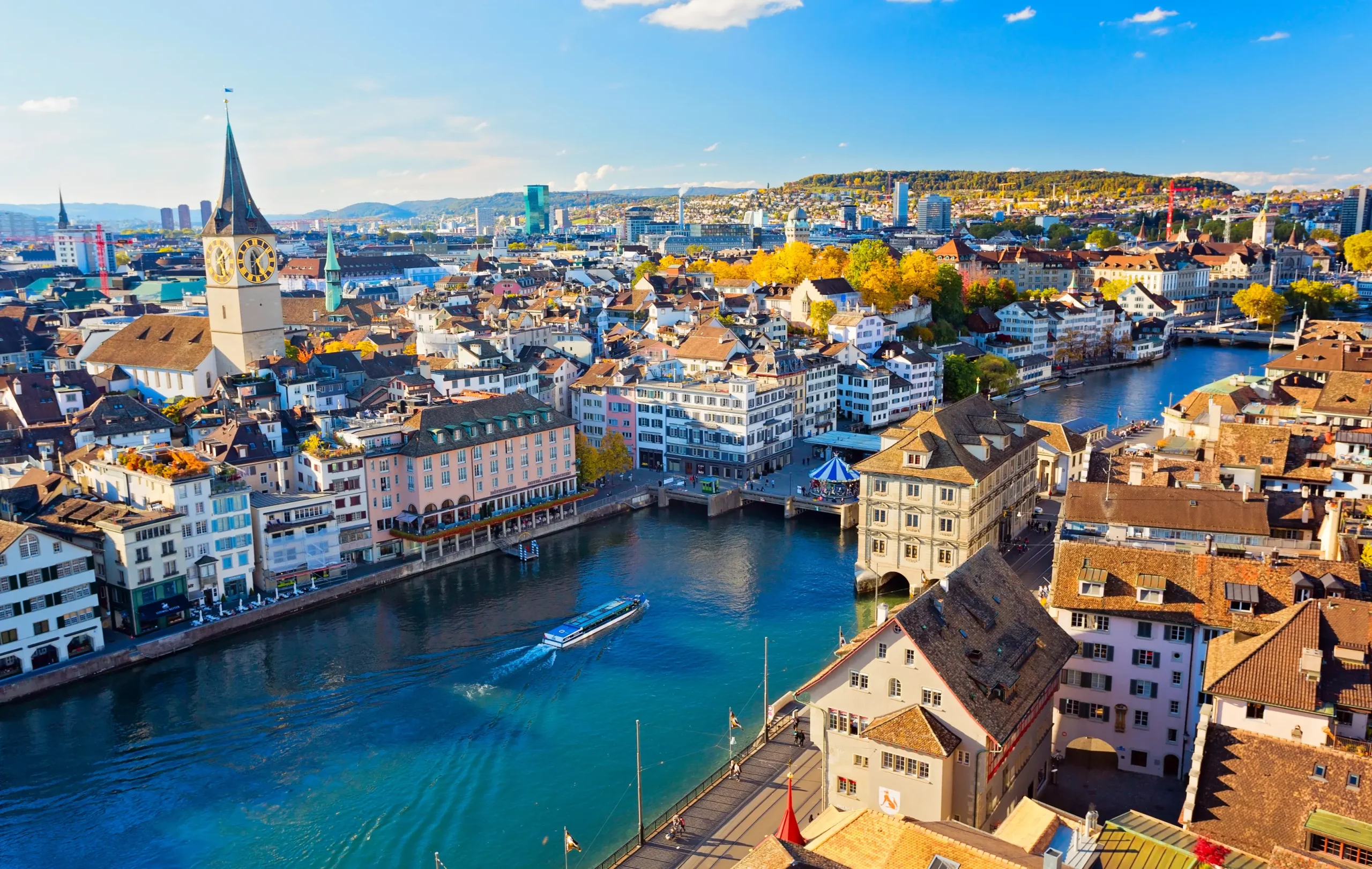
March · April · MaySpring is Switzerland waking up. By April, the valley floors are vivid green, wildflowers are appearing on lower alpine meadows, and the crowds that descend in summer haven't arrived yet. Cities like Zurich, Lucerne, and Geneva are at their most comfortable for walking — mild temperatures, outdoor cafe culture starting to emerge, and hotel rates that haven't hit peak levels.
The caveat is altitude. Many high-altitude experiences — Jungfraujoch, the Glacier Express, alpine hiking trails above 2,000 metres — are still operating in limited form or on winter schedules through March and into early April. By May, most of the rail panoramas and mountain restaurants are fully open, and the combination of fewer crowds and everything functioning is genuinely one of the most underrated windows to visit.
For Australians, spring travel means departing in the Australian autumn (March to May), which typically sits outside school holiday periods. That means slightly more flight flexibility and competitive fares, though Switzerland itself is not a destination where accommodation costs swing dramatically outside peak.
Pros
- Lower crowds than summer
- Fresh alpine landscapes, wildflowers
- Good value shoulder-season rates
- Comfortable city temperatures
- May: everything fully operational
Cons
- March/April: some high-altitude closures
- Unpredictable rain in April
- Snow can still affect passes in March
- Less dramatic scenery than autumn or summer
Summer: June to August
Summer in Switzerland
June · July · AugustSummer is Switzerland at full volume. Everything is open, the days are long, alpine hiking is in peak condition, and the lakes are warm enough to swim. It's also Switzerland at its most visited. July and August bring European holidaymakers, international tourists, and a significant number of Australians travelling during the winter school break.
The Jungfraujoch queues in peak summer are real. The Glacier Express dining car is under pressure. Zermatt's main street is busy in a way that can detract from the village atmosphere the destination is actually famous for. None of this makes summer a bad time to visit — it makes it a time that requires planning, early booking, and realistic expectations about shared attractions.
June is the pick of the summer months for most travellers. The crowds haven't fully arrived yet, conditions are excellent, and the days are at their longest. If your travel is constrained by Australian school holidays and July or August is your only option, book early, choose accommodation in less-visited bases like Grindelwald rather than Interlaken, and build in early morning starts for the major mountain experiences.
Pros
- Everything open, full access
- Peak hiking conditions
- Warm lake swimming
- Long daylight hours
- Aligns with Australian school holidays
Cons
- Peak crowds at major attractions
- Highest accommodation prices
- Jungfraujoch queues can be significant
- Afternoon thunderstorms common in July/August
- Book 6+ months ahead or accept limited choice

Autumn: September to November
Why Autumn Is the Best Time to Visit Switzerland — for Most Australian Travellers
This isn't a seasonal preference. It's a considered argument based on what Switzerland actually looks like in autumn, what the crowds are like, and what the experience delivers for someone who has travelled a long way to be there.
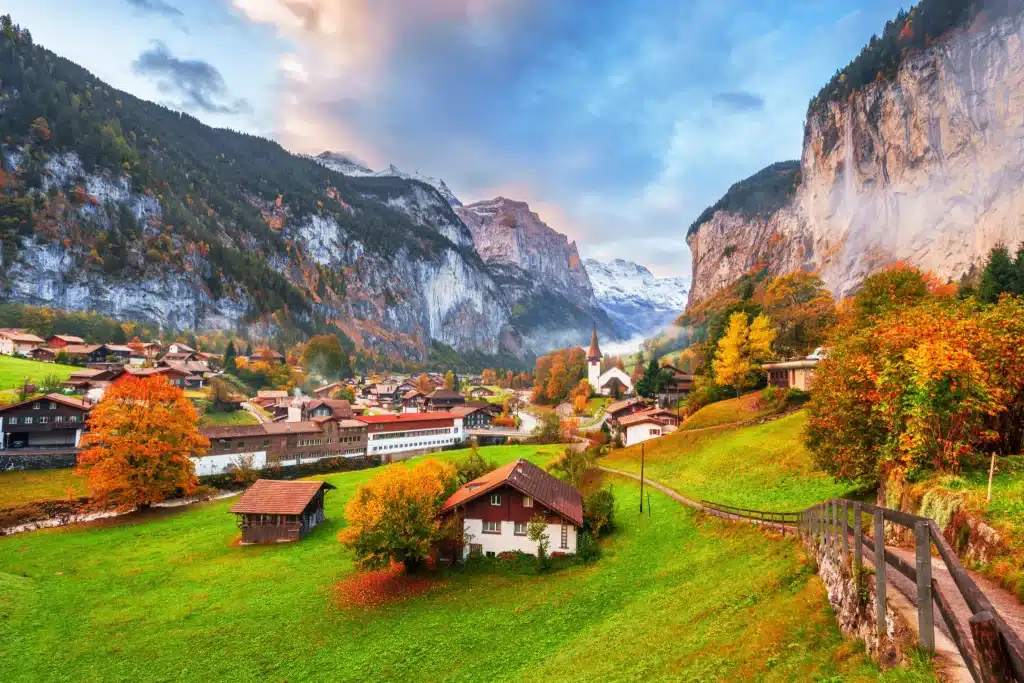
Between September and November, Switzerland undergoes a transformation that the majority of international visitors never see. The larch forests above 1,500 metres turn gold. The Glacier Express cuts through valleys blazing with copper and amber. Lake Lucerne in October catches a clarity and stillness that summer haze removes entirely. The Matterhorn, framed by first snow on the high peaks against an intensely blue autumn sky, looks precisely like the photograph that made you want to come in the first place.
Here is why autumn works specifically for Australians.
-
Flight timing works well September to November sits in Australian spring. School terms are in session, which means you're likely travelling without the school-holiday booking pressure. Flights and accommodation tend to be more available and competitively priced than the July-August peak.
-
Crowds drop significantly September sees a sharp drop in visitor numbers after the European summer ends. October is noticeably quieter at every major attraction. Jungfraujoch, Zermatt, the Glacier Express — all become experiences again rather than crowd management exercises.
-
The landscape is at its most dramatic Autumn colour in the Swiss Alps is extraordinary and largely underpublicised. Larch forests peak in October. Vineyards across the Lavaux and Valais regions are in harvest. The contrast between golden forests, snow-capped peaks, and mirror-clear lakes is the Switzerland photograph you thought only existed in summer.
-
Rail experiences are at their best The Glacier Express and Bernina Express both run in full autumn operation. The dining car is relaxed. Seat selection is possible. The scenery through the windows is, by most accounts, more spectacular in autumn colour than at any other time of year.
-
Harvest season adds a cultural layer The Lavaux UNESCO wine terraces celebrate harvest in September and October, with local tastings and vineyard walks that simply don't exist in the same form at any other time. Gruyeres cheese production is at its most active. This is Switzerland beyond the mountains.
-
Value is meaningfully better than peak summer Autumn rates in Switzerland are lower than July and August at most hotels, particularly in resort towns like Zermatt and Interlaken. The combination of better experience and lower cost is a compelling case on its own.
Ormina's entire Switzerland programme is fully flexible and built to fit around Autumn and off-peak windows. The Autumn in Switzerland: Golden Peaks and Alpine Villages itinerary is the flagship, designed specifically to move through the Jungfrau region, Zermatt, and the Glacier Express corridor during the weeks when the transformation is at its most extraordinary.
For a deeper look at what specific destinations look like in this season, read Autumn in Switzerland and our detailed piece on why Switzerland in autumn is an unforgettable travel experience.
Autumn Pros
- Peak foliage and dramatic scenery
- Meaningfully fewer crowds
- Better value than summer
- Rail journeys at their most scenic
- Harvest season cultural experiences
- Works well with Australian spring travel
Autumn Cons
- Some high-altitude trails close in November
- Shorter daylight hours by November
- Cold evenings from October onwards
- Some seasonal restaurants close late October
Winter: December to February
Winter in Switzerland
December · January · FebruarySwitzerland in winter is a specific kind of trip. If your primary goal is skiing, Zermatt, Verbier, and St Moritz offer world-class conditions from December through March, with reliable snow cover and extensive piste networks. The resort infrastructure is superb, and the villages themselves have a charm that summer visitors rarely see — quieter than their peak-season selves, with the smell of woodsmoke and the sound of bells on horse-drawn sleighs in the older streets.
December has the added dimension of Christmas markets. Zurich, Lucerne, and Basel host some of Europe's most atmospheric festive markets, and early December — before the main European Christmas rush — is one of the more underrated windows to visit Switzerland's cities.
For Australians, December travel aligns with the Australian summer and the Christmas school holiday period, which means high demand and high prices for flights. January and February are quieter on the Australian travel calendar and can offer better flight availability for those committed to a ski-focused trip.
Winter is a poor choice if your priority is rail journeys, hiking, or cultural exploration of the non-ski variety. The Glacier Express runs in winter but the scenery is snow-heavy rather than dramatically varied. Many alpine hiking trails are closed. If Switzerland is on your list primarily for the mountain scenery, the lakes, and the cultural depth of its cities, winter is the season you should probably avoid unless skiing is central to the plan.
Pros
- World-class skiing at Zermatt, Verbier, St Moritz
- Magical Christmas markets (December)
- Quieter city atmosphere outside ski resorts
- Snow scenery is genuinely beautiful
Cons
- Most hiking trails closed
- Ski resorts are expensive and crowded
- December flights align with Australian Christmas peak
- Limited cultural and rail exploration options
- Shorter daylight hours
"Switzerland in July is spectacular. But Switzerland in October, when the crowds have gone and the larches have turned gold, is something most visitors never see — and never forget."
The Verdict: When Should Australians Visit Switzerland?
For most Australians: September or October
If you have any flexibility at all on timing, September and October are the months to build your Switzerland trip around. The landscape is at its most dramatic, the crowds are manageable, the rail experiences are running in full and are genuinely enjoyable rather than logistically stressful, and the value is better than summer.
As an Australian traveller, you're also working with a timing advantage. September and October sit in Australian spring, typically outside school holidays and away from the peak flight demand that July and August generate. The combination of a better in-destination experience and more flexible travel logistics makes this the clearest recommendation we can give.
If you're constrained by Australian school holidays and July or August is your only option, go in June rather than August if possible, book well ahead, and choose accommodation away from the most congested tourist hubs. Switzerland in summer is still magnificent. It just requires more planning and more patience than autumn does.
Ormina's 2026 Switzerland Autumn Journeys
Ormina's Switzerland programme is built specifically for the autumn window, developed in partnership with Switzerland Tourism. Every itinerary is designed to move through the destinations where the seasonal transformation is most dramatic, at the time when the experience is at its best.
Private Itinerary · New 2026
Autumn in Switzerland: Golden Peaks and Alpine Villages
Beyond the flagship autumn itinerary, Ormina offers a full range of Switzerland tailored journeys — from the Luxury Rail Journey through the Swiss Alps to the Italian Lakes and Swiss Mountains small group tour running from May through October. All itineraries can be adapted to your preferred dates and travel style.
If autumn is your window and you want to understand what the season actually looks like on the ground before you book, start with our guide to Switzerland in autumn. It covers the specific destinations, the conditions, and the experiences that make September and October the season worth planning around.