





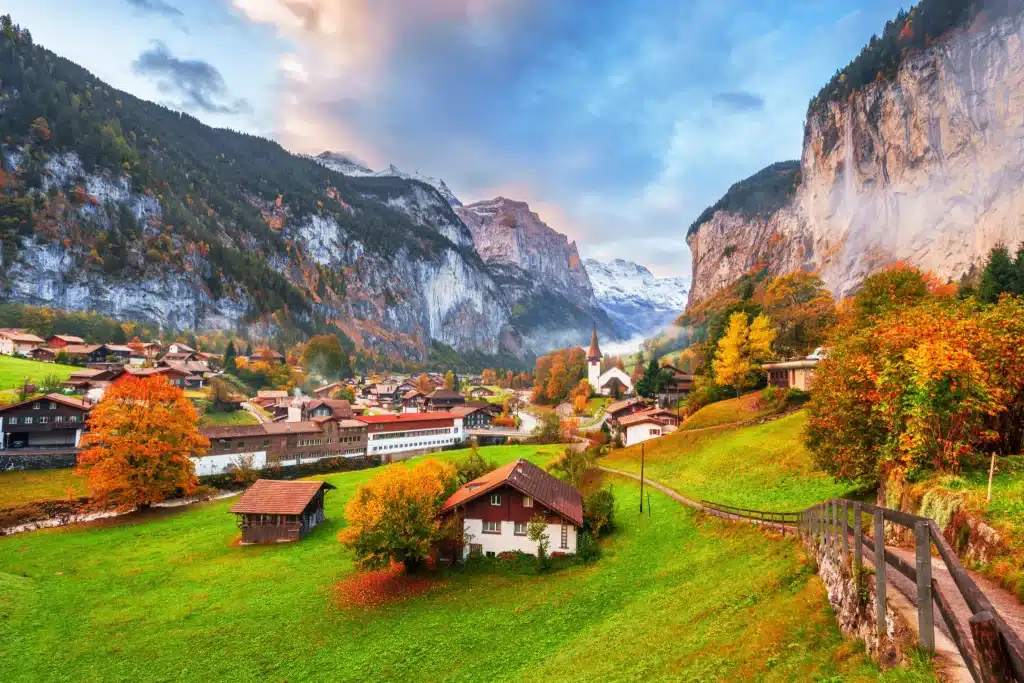


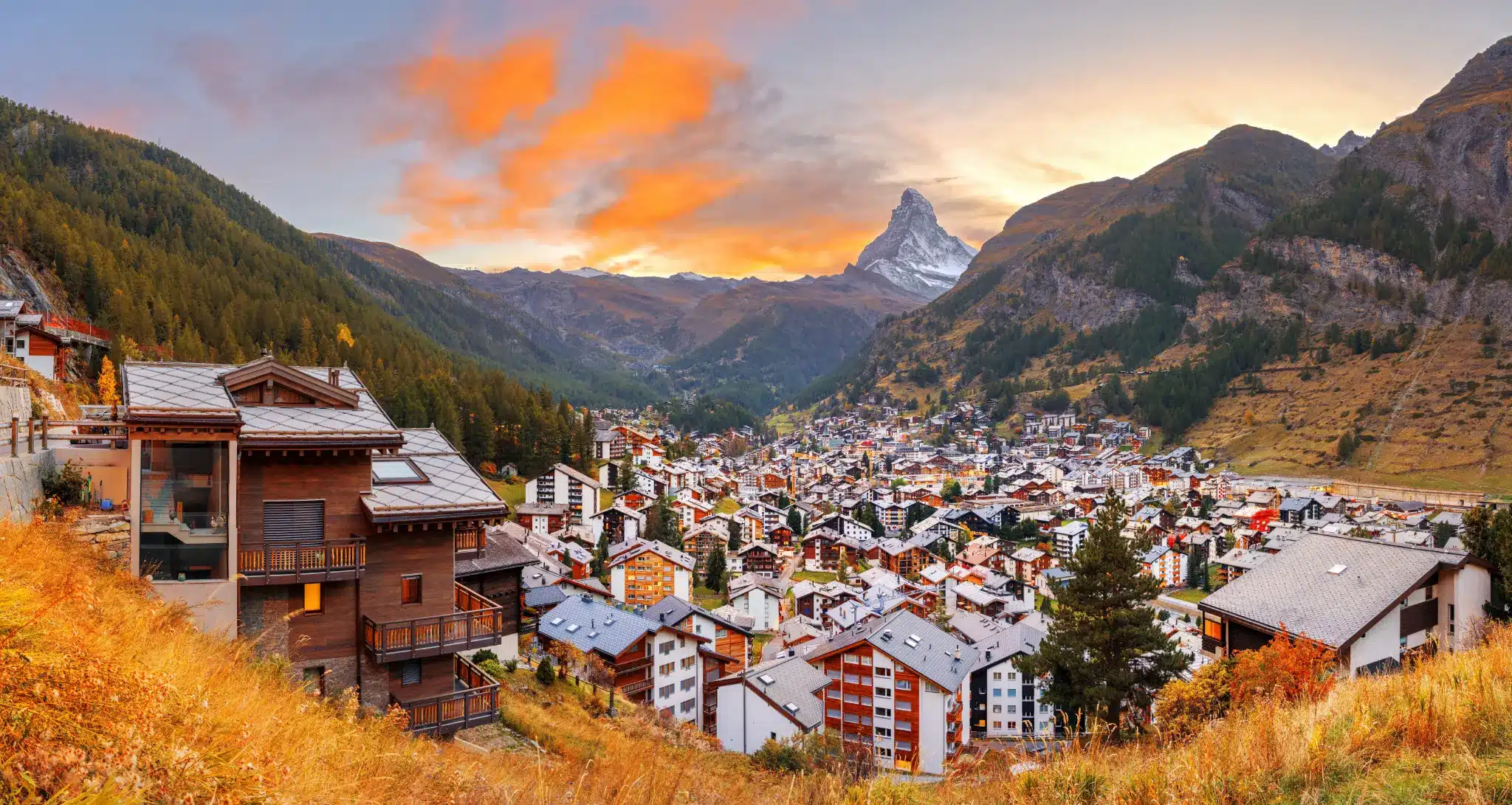
The Jungfrau region in autumn is Switzerland's most dramatic seasonal transformation. As the alpine forests descend into copper and amber and the peaks accumulate their first snow, a landscape that's already among the world's most extraordinary acquires a quality that photographs will never adequately explain. You need to stand in it.
This New Itinerary Was Built for One Season
Ormina Tours' new Jungfrau Autumn itinerary is a journey created specifically for the September to November window — the period when the region around Lucerne, the Bernese Oberland, and the high Valais is at its most spectacular. The route moves deliberately through a sequence of experiences: lake, mountain village, summit, glacier, alpine meadow. Each one distinct. All of them unforgettable in autumn.Lucerne and Weggis: The Starting Point
 The journey begins at Lake Lucerne, one of the most beautiful alpine lakes in Europe. Lucerne itself needs no introduction — the Chapel Bridge, the medieval Old Town, the mountains framing the water on every side. But this itinerary begins with an insider move: staying in Weggis rather than Lucerne itself.
Weggis is a small lakeside village on the south shore of Lake Lucerne, sheltered from the north by the Rigi massif. It's the definition of a place Lucerne visitors don't reach. A quiet promenade, a handful of excellent hotels, palm trees (yes, palm trees — the microclimate here is extraordinary), and a lake view that is, in autumn, quietly perfect. It is also the starting point for the journey up Mount Rigi.
The journey begins at Lake Lucerne, one of the most beautiful alpine lakes in Europe. Lucerne itself needs no introduction — the Chapel Bridge, the medieval Old Town, the mountains framing the water on every side. But this itinerary begins with an insider move: staying in Weggis rather than Lucerne itself.
Weggis is a small lakeside village on the south shore of Lake Lucerne, sheltered from the north by the Rigi massif. It's the definition of a place Lucerne visitors don't reach. A quiet promenade, a handful of excellent hotels, palm trees (yes, palm trees — the microclimate here is extraordinary), and a lake view that is, in autumn, quietly perfect. It is also the starting point for the journey up Mount Rigi.
Insider Tip
Take the cogwheel railway from Weggis to the Rigi Kulm summit at dawn. The autumn sunrise over a sea of fog filling the lowland valleys below, with the Alps emerging above the cloud, is one of those experiences that changes how you think about landscape. Dress warmly. Arrive early.
Mount Rigi: The Queen of Mountains in Autumn
Mount Rigi was the first Alpine mountain accessible to tourists — the cogwheel railway opened in 1871 and changed how Europe thought about mountains. On a clear autumn morning from the Rigi Kulm summit, the panoramic view encompasses Lake Lucerne, Lake Zug, Lake Lauerz, and on clear days the Zürichsee — all below a horizon of Alpine peaks. In October, the forested lower slopes are gold and red. The summit itself may have a light dusting of snow. The contrast is extraordinary.Mürren: The Car-Free Village Above the Clouds
Mürren sits on a cliff ledge 1,638 metres above sea level, directly opposite the Eiger, Mönch, and Jungfrau. No cars. No through traffic. Just a cable car from Lauterbrunnen valley, a small village of chalets, and one of the most arresting views in Europe. In autumn, the valley below fills with morning fog, the peaks above glow in low light, and the village quiets down to its most authentic self. This is where Switzerland exists as most people imagine it, but rarely find. A short walk from Mürren leads to Gimmelwald, an even smaller village where traditional farming continues as it has for generations. The Gimmelwald Farm Visit and cheese tasting — a highlight of this new itinerary — puts you inside the Swiss agricultural tradition in a way that no museum visit comes close to replicating.Grindelwald: Beneath the Eiger's North Face
Grindelwald sits directly below the Eiger's famous north face. The wall of rock rises directly from the valley floor with a drama that stops conversation. In autumn, the Kleine Scheidegg pass above the village turns amber, and the morning views from the valley across to the Wetterhorn and Schreckhorn are, frankly, ridiculous in their beauty. Grindelwald in autumn also sees the return of the locals after the summer tour groups leave. The restaurants, the shops, the mountain railway platforms — everything operates at a more human scale.Jungfraujoch: Top of Europe in Autumn
The ascent to Jungfraujoch, the highest railway station in Europe at 3,454 metres, is one of the great mountain experiences in the world. The Eiger Express cable car from Grindelwald delivers you to the Eigergletscher station before the Jungfrau Railway takes you through the interior of the mountain to the summit. At the top: the Aletsch Glacier, the longest glacier in the Alps; the Ice Palace, carved into the glacier itself; and the Sphinx Observatory, perched at the summit with a 360-degree view of a world defined entirely by snow, glacier, and sky. In autumn, below the treeline the colours are extraordinary. Above it, you're in a world of permanent winter.Interlaken: The Gateway Between Two Lakes
Interlaken sits between Lake Thun and Lake Brienz, with the Bernese Alps rising to the south. In autumn, both lakes shift to a deeper blue-grey, the surrounding forests turn gold, and the town's famous Höhematte park — a protected open meadow in the centre of the village — frames the distant Jungfrau like a painting. Interlaken is primarily a base for mountain excursions, but the lakes on either side reward a boat excursion or a lakeside cycle in autumn.Bettmeralp: Closing on a High Note
The itinerary closes in Bettmeralp, a car-free village in the Valais at 1,950 metres above sea level, with direct access to the Aletsch Arena — the largest glacial region in the Alps and a UNESCO World Heritage Site. In autumn, the high meadows around Bettmeralp are transitioning from summer green to winter dormancy, with the larch forests in the valley below glowing gold. The Great Aletsch Glacier, viewed from the Moosfluh viewpoint at 2,333 metres, is one of the most powerful natural sights in Switzerland. The scale of it — 23 kilometres long, up to 900 metres deep — defies easy comprehension.Private Itinerary · 10 Days
Autumn in Switzerland: Golden Peaks & Alpine Villages
Lucerne & Weggis
Mt Rigi Golden Round Trip
Mürren Village Walk
Gimmelwald Farm & Cheese
Jungfraujoch
Interlaken
Bettmeralp
Aletsch Glacier (UNESCO)
From $6,999 AUD per person
View Full Itinerary